
Building a deaf-aware depot at Clandeboye
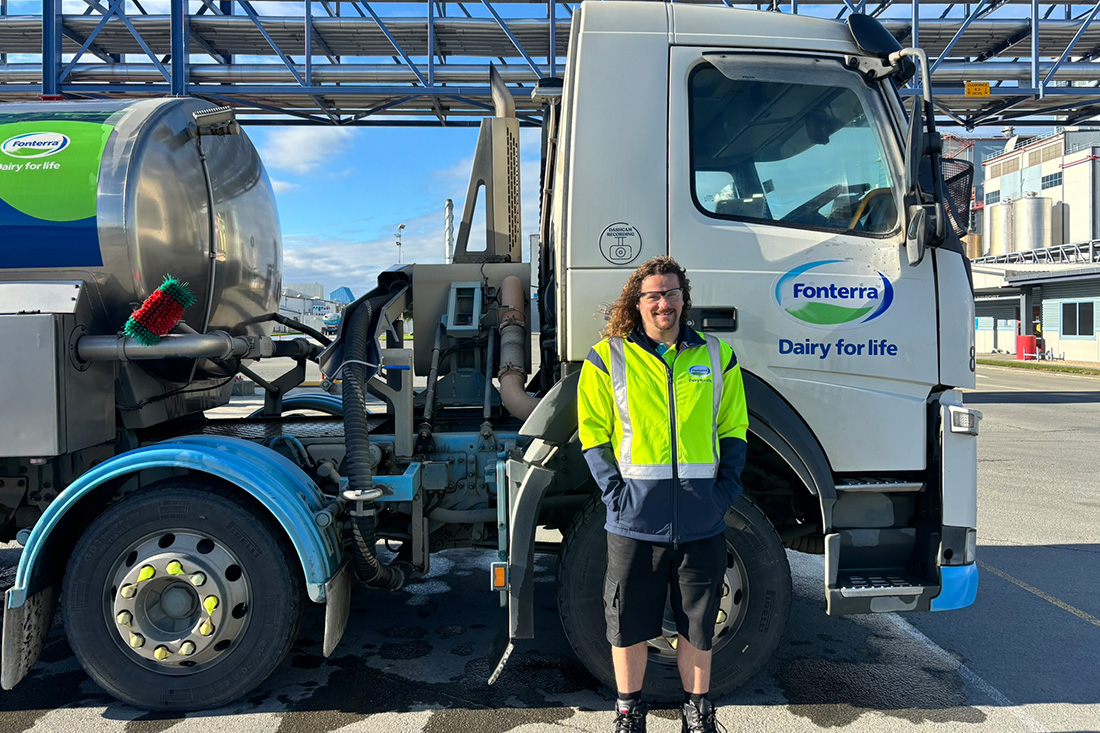
This New Zealand Sign Language Week, we’re highlighting Tanker Operator Joe Emmanuel, whose experience reflects how deaf awareness has become part of everyday life at the Co-operative’s Clandeboye site.
At Fonterra’s Clandeboye depot in South Canterbury, Tanker Operator Joe Emmanuel’s day starts much like everyone else’s on site.
“I arrive at work and wait for the manager to give me the instructions of what I need to do that day. I’ll read it through and then just get stuck in.”
It’s a busy depot, with a fleet of 70 tankers collecting around 2.6 billion litres of milk a year.
Driver Trainer Assessor, Brett Maddren, says he was unsure at first how training a deaf tanker operator would work.
“Because of the way we communicate, I thought it would be difficult. Then I went home and thought, ‘how could I actually do this and make it work?’” says Brett.
When Joe came in for his initial interview and driving assessment, Brett says it was clear to see his strengths as a driver. “We teach a lot of drivers about scanning and looking, but Joe already does that because he’s very good visually, so that was a great attribute to have.”
The next step was induction, something Brett didn’t want Joe to miss out on, but one simple change made a huge difference.
“Brett wore a microphone that connected to my phone so I could get a live transcript and didn’t miss out on anything. That was fantastic. It was an immediate adjustment that meant I could be included,” says Joe.
Throughout his recruitment journey, Joe had the support of New Zealand Relay a free, government-funded service enabling people with hearing and speech communication difficulties to use the phone.
Inclusivity is important, regardless of what language you speak. We don’t discriminate and everyone is treated the same.
Since joining the depot last August, Joe says the team has built a supportive, deaf-aware environment.
“Everyone knows they shouldn’t talk to me across the room, they need to face me, and they’ve gotten on board with that,” he says. “In the mornings at shift briefings, the team manager will face me and speak slowly so I can lip read.”
Joe mainly communicates through text and says someone is always available to help if he needs it. He’s also developed visual ways to communicate with others. “When I’m unloading a tanker, I will turn a light to signal green to let people know the valve is open…that’s a visual system that lets them know what’s going on.”
When new people come into the team, Joe says it can be nerve-wracking to meet them. “I wonder how I’m going to communicate and if it’ll go smoothly. But really, I feel like I’m treated as an equal here. I’m the same as every other member of the team.”
Brett believes that inclusion benefits the whole team. “If people feel left out that’s not good for morale. Inclusivity is important, regardless of what language you speak. We don’t discriminate and everyone is treated the same.”
That connection also shows up day-to-day. “We get on well and like to have a laugh”, says Brett. “Especially across the room, because Joe is very good at reading your face.”
New Zealand Sign Language Week recognises New Zealand Sign Language as one of the country’s three official languages, alongside English and Māori. For Joe, it’s a chance to build awareness and connection.
“I’m so happy that I’m meeting people that know about New Zealand Sign Language, that want to learn it,” says Joe. “It’s a really special week for us in the deaf community.”